
What’s emerging now is something fundamentally different. AI is no longer just helping people do work — it is starting to do the work itself. This is where AI agents come in, and why they are quickly becoming the next major shift in how businesses operate.
An AI agent is not simply a smarter chatbot or a more advanced model. It is a system capable of understanding a goal, making decisions, taking actions across multiple tools, and adjusting based on results. Instead of being used for a single interaction, it operates continuously inside a workflow.
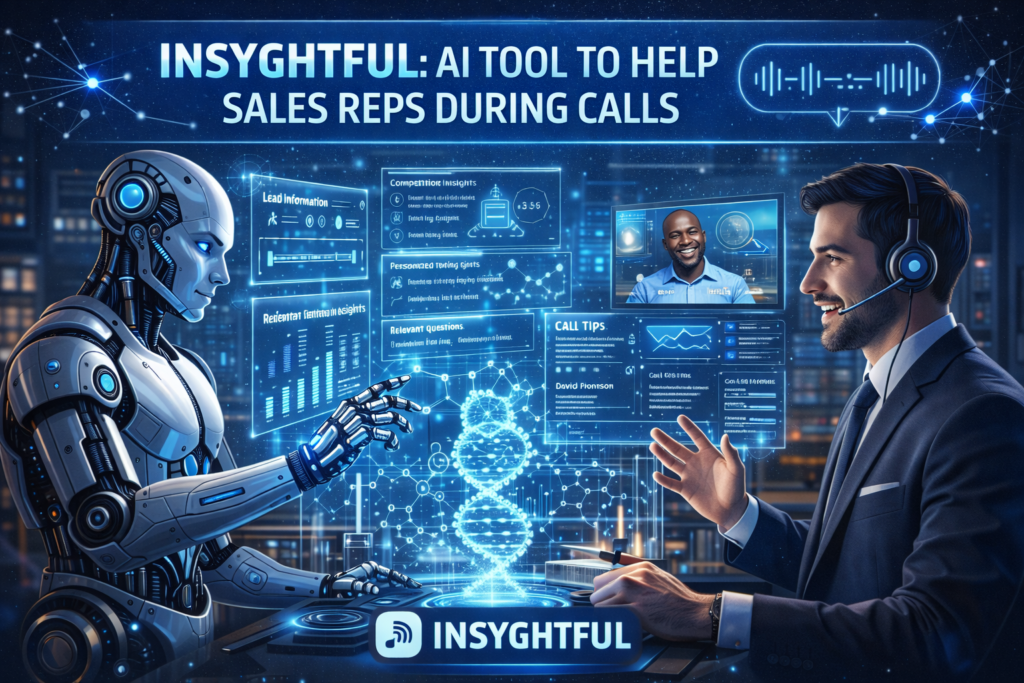
Additionally, a traditional AI tool might help a sales representative draft a follow-up email after a call. An AI agent, on the other hand, can monitor incoming leads, analyze their quality, respond automatically, update the CRM, and schedule meetings — all without constant human input. In fact, there is AI tool called Insyghtful that helps sales representatives during calls. It provides teams with insights, analyzes conversations in real time, detects hesitation or uncertainty from prospects, and suggests what to say during the calls. To put it simply, Insyghtful turns every call into a guided conversation.
Want to see how businesses actually benefit when AI agents and humans work together? Read the full article here.
Let’s take a closer look at how businesses operate these days. Most workflows are still fragmented. A single process often moves through multiple tools, with humans acting as the glue between them — copying information, making decisions, triggering the next step. It works, but it’s slow, error-prone, and difficult to scale.
AI agents remove this “human middleware”. They connect systems directly and handle the transitions that used to require manual effort. It fundamentally changes how work gets done, saving teams’ time.
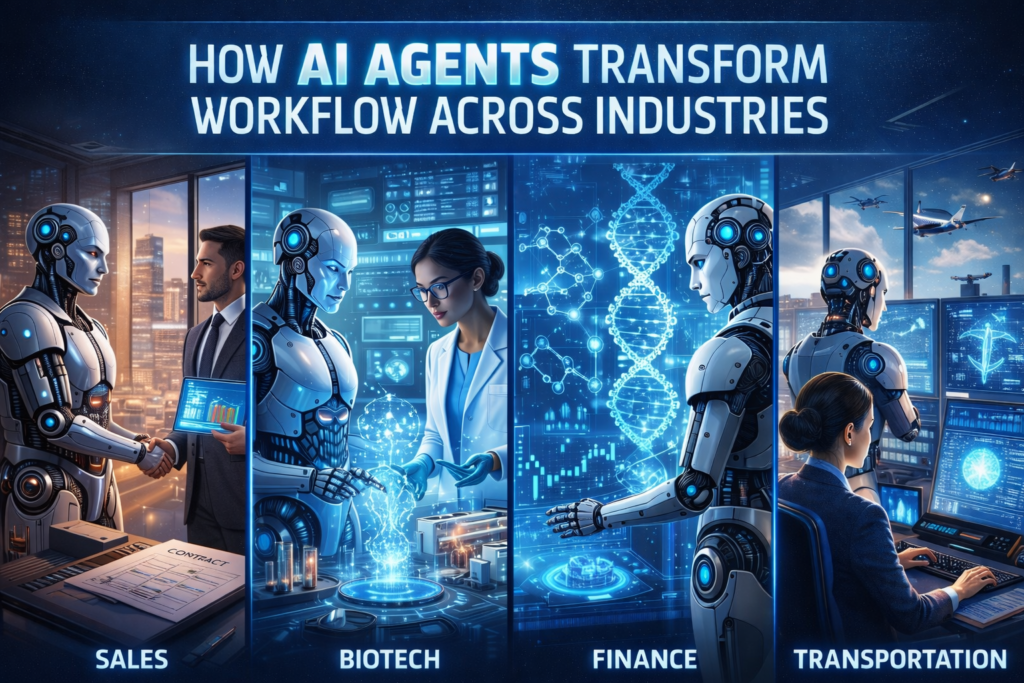
You can already see this transformation happening across industries — not in theory, but in practice.
Take Amazon, for example. Much of its operational advantage comes from AI systems that continuously manage logistics, demand forecasting, and warehouse operations. These systems don’t wait for human input at every step — they make decisions in real time, adjusting inventory levels, optimizing delivery routes, and predicting customer demand before it happens. What looks like a seamless customer experience is actually the result of thousands of automated decisions happening behind the scenes.
In sales and customer experience, companies like Salesforce have been embedding AI deeper into their platforms. Their AI capabilities don’t just generate insights — they actively guide actions, from prioritizing leads to recommending next steps for sales teams. The shift is subtle but important: AI is no longer just informing decisions, it is shaping them as they happen.
Netflix provides another clear example. Its recommendation engine is often described as a feature, but in reality, it behaves more like an agent. It continuously analyzes user behavior, tests variations, and adapts content suggestions in real time. This system directly influences engagement, retention, and ultimately revenue — without requiring manual intervention.
Even in more operationally complex environments, the shift is visible. Companies like Uber rely on AI systems to dynamically match supply and demand, adjust pricing, and optimize routes. These decisions happen continuously, at scale, and under changing conditions — something that would be impossible to manage manually.
Companies that embed AI into their workflows gain a structural advantage. Their systems move faster, respond earlier, and scale more efficiently.
Operational workflows are another area where the impact is immediate. Many companies still rely on people to handle repetitive but essential processes — reviewing documents, updating systems, generating reports, moving data between platforms. These tasks don’t require creativity, but they do require time and attention. AI agents can take over these responsibilities entirely. A hiring workflow, for example, can run autonomously: reviewing incoming CVs, evaluating candidates against criteria, ranking them, and even sending follow-ups. What once required hours of coordination becomes a continuous, automated process.
In more complex fields like biotech and data research, the role of AI agents becomes even more powerful. The challenge in these industries is not a lack of data, but the difficulty of connecting it.
One of the projects we worked on with Euretos illustrates this well.
Research teams needed to connect scientific literature, gene expression data, protein interactions, disease pathways, and clinical insights — all coming from different sources, formats, and structures. Instead of a unified view, they were dealing with fragmentation, spending weeks manually stitching together information before they could even begin forming hypotheses.
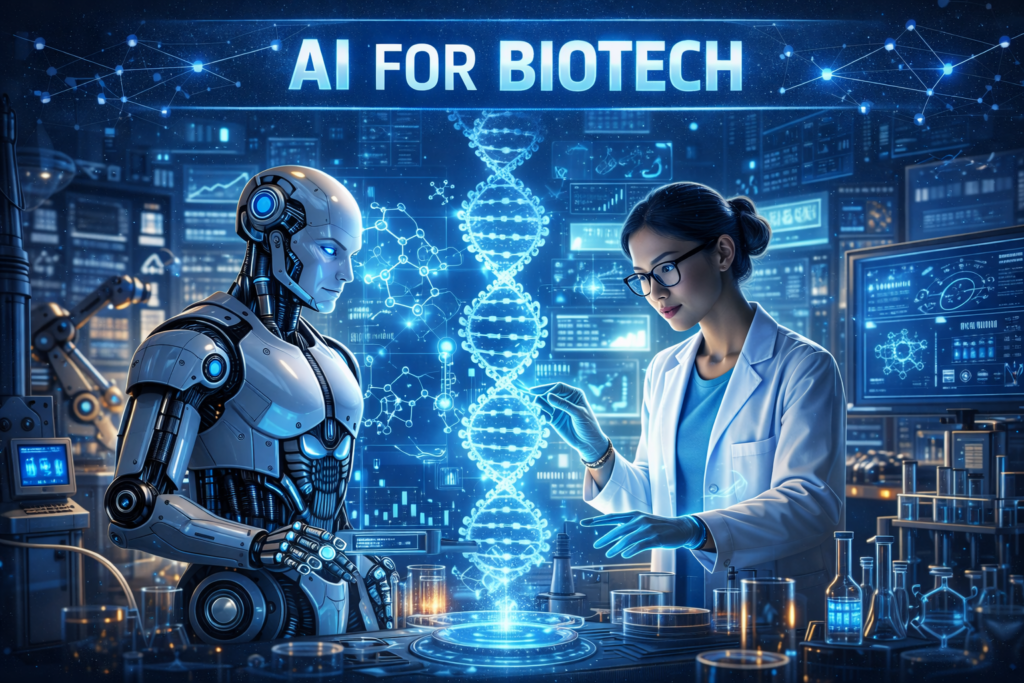
To address this, our team built a data processing platform that ingests and unifies data from over 100 biomedical sources, including PubMed, UniProt, Reactome, and TCGA. The system parses heterogeneous formats, structures them into a shared knowledge graph, and applies NLP to extract entities and relationships.
On top of that, we enabled semantic search and analytical layers that allow researchers to explore connections between genes, diseases, drugs, and pathways in a single environment.
The result is not just faster access to data, but a fundamentally different way of working. What previously required weeks of manual effort can now happen in minutes — and more importantly, it enables the discovery of relationships that would be nearly impossible to identify manually.
This is exactly where AI agents and intelligent systems converge: not just retrieving information, but actively helping generate insights.
Many companies are still in the early stages of this transition. They are experimenting with AI in isolated use cases — generating content, summarizing information, answering questions. While valuable, these applications only scratch the surface. The real impact comes when AI is embedded directly into workflows, operating continuously in the background, connecting processes, and driving outcomes without constant supervision.
Word from Duanex
At Duanex, we see this shift not as a trend, but as a structural change in how modern systems are designed.In many projects, the challenge is not introducing AI itself — it’s integrating it into real business workflows, connecting it with existing systems, and ensuring it operates reliably at scale. This is where most off-the-shelf solutions fall short.
Our focus is on building AI-powered systems where agents are not isolated features, but part of a larger architecture — interacting with data, tools, and processes in a way that reflects how the business actually operates.