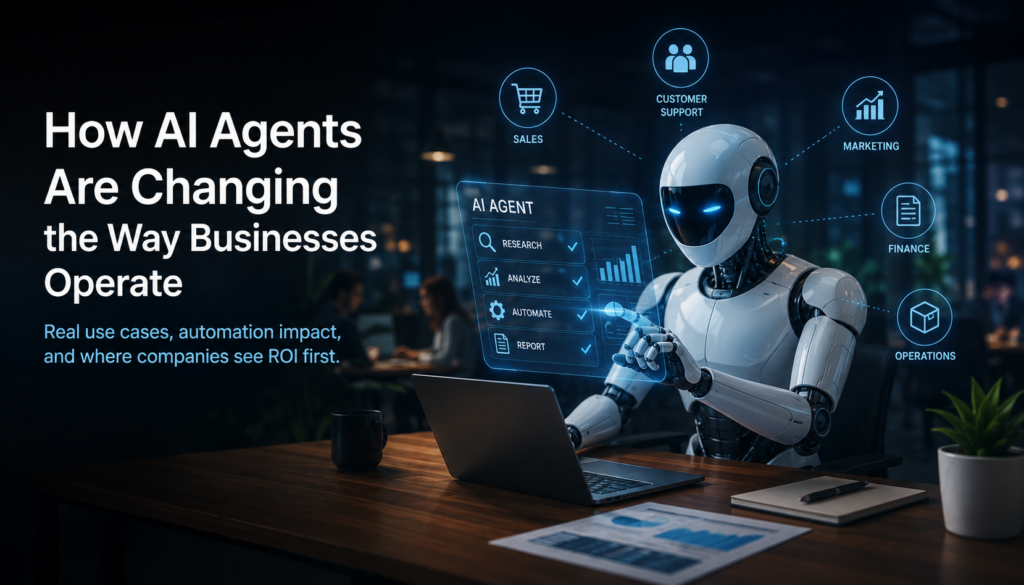
AI has spent the last few years becoming very good at answering questions. In 2026, businesses are asking it to handle manual and other kinds of work. That is the shift behind the growing interest in AI agents.
Instead of using AI as a tool that employees open when they need help, companies are starting to connect AI directly to the systems where work happens. An agent can read an incoming request, gather information, make a decision, use business software, complete several steps, and involve a human when the situation requires it. This doesn’t mean companies are suddenly replacing entire departments with autonomous AI. In most cases, the change is much more practical.
From AI Assistants to AI Agents
The difference between an AI assistant and an AI agent can sound small, but it matters.
An assistant usually waits for a person to ask it something. You give it a prompt, and it gives you an answer. An agent is designed around a goal. It can determine what information it needs, interact with other software, complete a sequence of actions, and decide when it needs help from a person.
Consider a simple example. A customer sends a message saying that their order hasn’t arrived and they want a refund. A traditional chatbot might tell them how to request a refund.
- Identify the customer.
- Find the order in the company’s system.
- Check the shipping status.
- Review the company’s refund policy.
- Determine whether the request qualifies.
- Start the refund process if it is within its permissions.
- Send the customer an update.
- Escalate the case if something doesn’t look right.
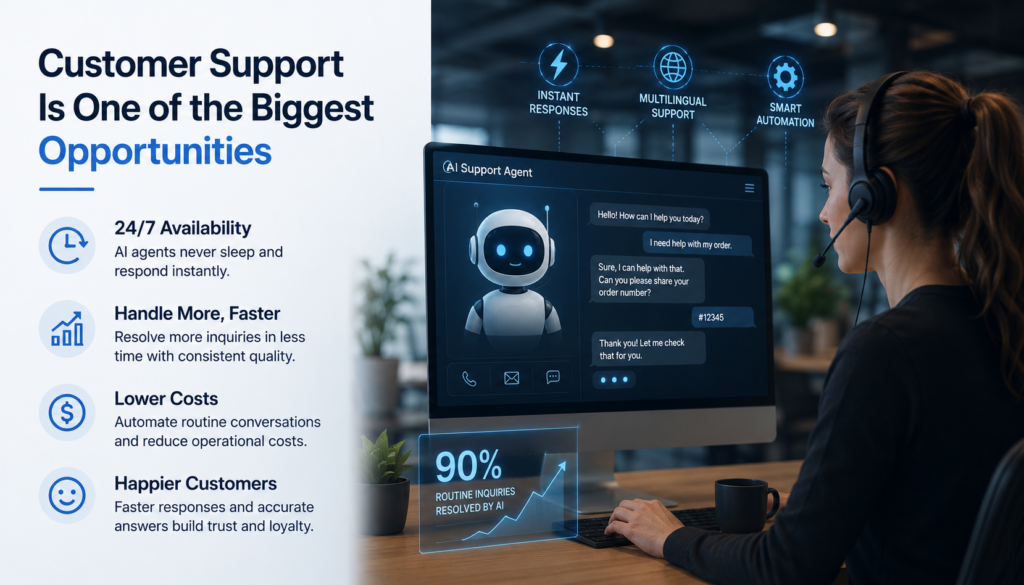
Customer Support Is One of the Biggest Opportunities
Customer support is probably one of the easiest places to see the potential.
Most companies have thousands of customer interactions that require some combination of searching for information, checking an account, looking at an order, updating a system, and responding to the customer.
A human can do all of this, but in 2026 they shouldn’t do it manually. An AI support agent can handle routine requests and perform the initial investigation before a human ever gets involved. For example, if a customer says their payment failed, the agent could check the payment status, look at the customer’s account, identify whether there is a known issue, and explain the next step.
If the problem is more complicated, it can hand the conversation to an employee with the relevant information already collected. This changes the role of the support employee. Instead of spending most of the day answering repetitive questions and gathering basic information, they can focus on exceptions and situations where human judgment actually matters.
It also creates very clear metrics for measuring ROI:
- Average resolution time
- Cost per support interaction
- Number of tickets handled automatically
- Escalation rate
- Customer satisfaction
- First-response time
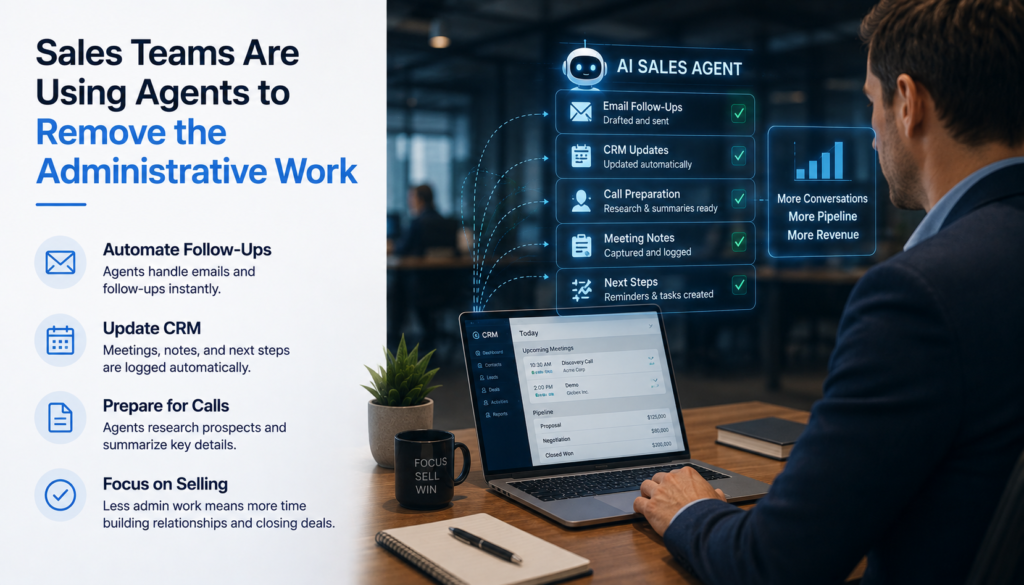
Sales Teams Are Using Agents to Remove the Administrative Work
Sales is another area where AI agents can have a practical impact.
Salespeople spend a lot of time on activities that surround the actual sales conversation.
They research companies, prepare for meetings, write follow-ups, update CRM records, review previous conversations, create proposals, and remember which prospect needs to be contacted next. None of this is particularly difficult, but it adds up.
Imagine a salesperson finishes a call with a prospect. Instead of manually writing notes and updating several CRM fields, an AI agent could analyze the conversation and identify:
- What the prospect is trying to solve
- What objections came up
- Who the decision-makers are
- What was agreed during the call
- What needs to happen next
It could then update the CRM, create a follow-up task, draft an email, and remind the salesperson when it’s time to take the next step.
The salesperson still makes the important decisions.
The agent simply makes sure the administrative work doesn’t get in the way.
This is an important distinction because the most valuable AI applications aren’t always about replacing people. Sometimes they’re about giving people back the time they spend doing work that a machine can handle.
But there is another interesting direction emerging in sales: AI that works during the conversation, not after it. A good example of this approach is Insyghtful.ai, an AI sales agent designed to support reps during live sales conversations.
Instead of simply summarizing a call afterward, Insyghtful analyzes the conversation in real time and provides prompts when it detects things like unresolved objections, weak next steps, or missing decision-makers.
It can also help turn the conversation into structured CRM information, reducing the manual work that usually happens after a call.
It’s to give them an AI partner that helps them notice more, react faster, and spend less time on administrative work.
That is a good example of where AI agents are heading: working alongside employees and improving the workflow while the work is actually happening.
Finance and Back-Office Work
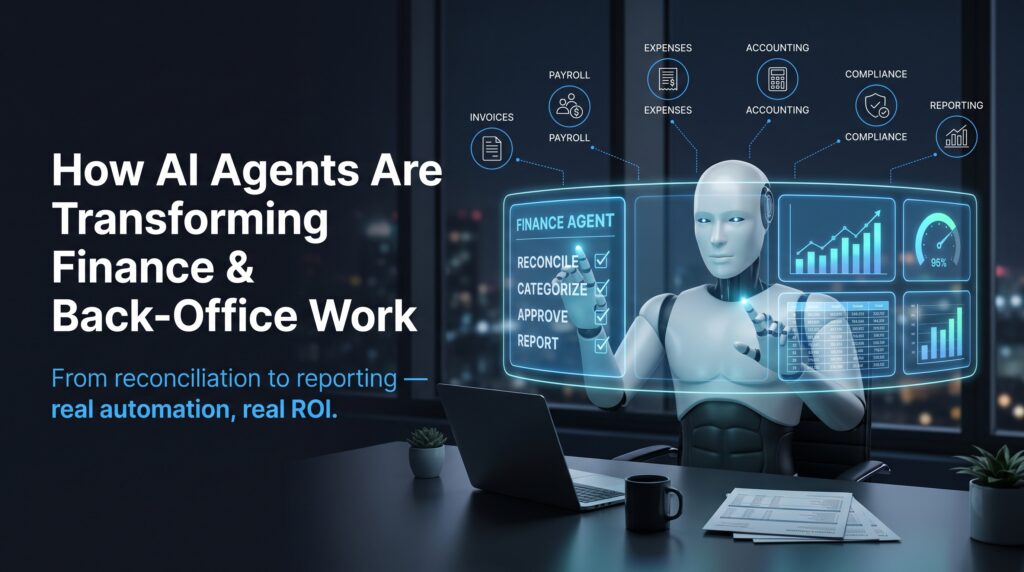
Finance teams deal with a lot of repetitive work. Invoices are a good example.
Someone has to check the details, compare the invoice with the purchase order, look for anything unusual, and then send it to the right person for approval.
An AI agent can handle most of that first pass. It can pull out the numbers, compare the documents, flag anything that looks off, and leave the final decision to a person.
The same idea works for expense reports, vendor onboarding, document processing, and routine reporting. It’s not a flashy use case. But that’s kind of the point. Some of the best places to use AI are the boring tasks people have to do every single day.
Integration Is Where the Real Work Happens
Building a convincing AI demo isn’t particularly difficult anymore. Building something that works reliably inside a real business is a different story. An agent needs access to the right information and tools. That might mean connecting it to:
- CRM systems
- ERP platforms
- Help desks
- Internal databases
- Document storage
- Communication platforms
- Analytics systems
- Custom business applications
It also needs permissions. An agent shouldn’t have unlimited access simply because it is technically possible. Companies need to decide what the agent can read, what it can change, and what actions require approval. They also need monitoring.
If an agent makes an unexpected decision, the business should be able to understand what happened.
That’s why successful agent implementations are becoming less about clever prompts and more about good software engineering, data quality, integrations, security, and workflow design.
How Companies Should Start
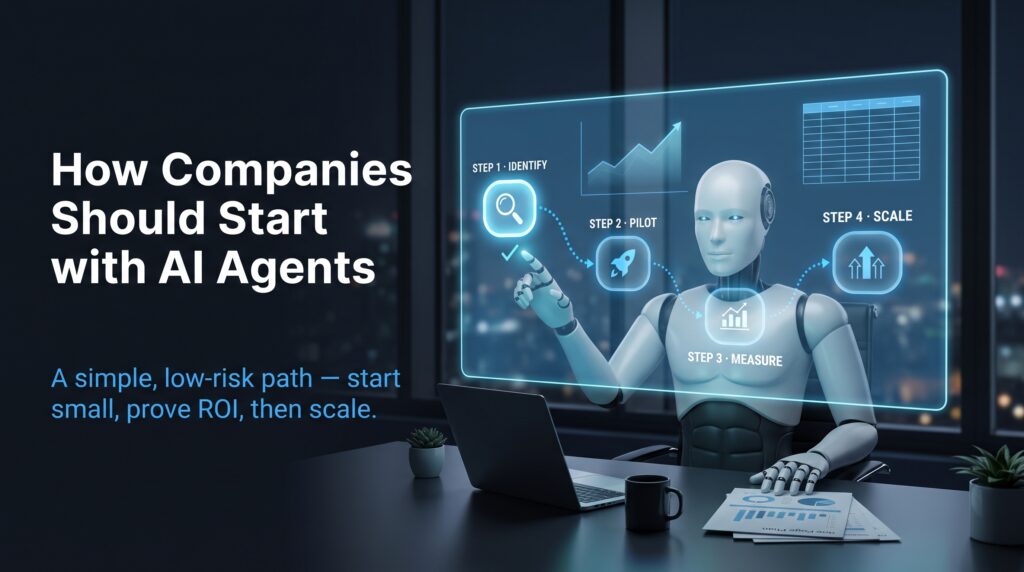
For businesses that haven’t implemented AI agents yet, there’s no need to start with a massive transformation project. Start with one workflow and look for something that employees complain about regularly. Something repetitive and measurable that involves too much copying, checking, searching, or switching between systems. Then measure what happens before and after automation. For example:- Before: Employees spend 500 hours a month processing support requests.
- After: An agent handles the routine portion, reducing manual work to 250 hours.
Here is another business case. You can calculate the savings, understand the limitations, improve the workflow, and decide whether the same approach makes sense somewhere else.
That’s a much healthier way to approach AI than trying to “AI-enable” the entire company at once.
What AI Agents Will Mean for Business in 2026
We’re still relatively early in this transition. The technology is improving quickly, but companies are learning something important along the way. The successful AI adoption isn’t really about having access to the smartest model, but about putting AI in the right place.
The companies that get the most value from AI agents will likely be the ones that start with real operational problems rather than impressive demos.
They’ll look for workflows where employees are overloaded, customers are waiting, information is scattered, and repetitive decisions are consuming valuable time.
Then they’ll automate carefully, measure the result, keep humans involved where they need to be, and expand from there.
That’s probably the most useful way to think about AI agents in 2026.